Coded Naija Music is among the most rated music downloading site in Nigeria. Download unlimitedly to your satisfaction. We also promote upcoming artiste to stardom.
Joining the cast of The Only Way Is Essex can’t be easy – as well as having all the drama of the Essex boys and girls to deal with, the star’s also have to face the wrath of the British public.
How many of these do you remember...?
Order the pizza, open the plonk and put your feet firmly up, because Britain’s Got Talent returns to our screens this weekend. YES BGT!
We remember them for their portrayals of favorite characters — Mary Richards (Mary Tyler Moore), Princess Leia (Carrie Fisher), Jason Seaver (Alan Thicke) — and the music that will remain in rotation — George Michael, Leonard Cohen, Mose Allison. For the movies they helmed (Garry Marshall), the books they wrote ("The Exorcist" author William Peter Blatty) and sports history they made (Muhammad Ali). For the astronomical highs they reached (John Glenn), and
Are these two heading down the aisle?
SO, ever since we heard outrageous reality stars Charlotte Crosby and Stephen Bear were dating, we’ve all been totally hooked on their romance.
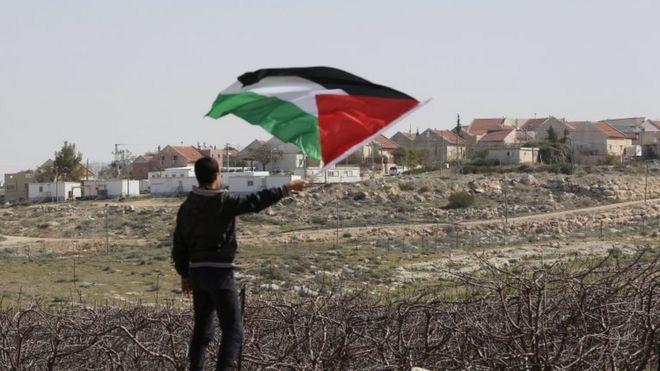
Image copyrightEPAImage captionThe idea of creating an independent Palestinian state that co-exists with Israel underpinned Middle East peace policy for decades
US President Donald Trump has invited Palestinian leader Mahmoud Abbas to visit the White House "very soon".
He extended the offer in a phone call on Friday with the Palestinian Authority president, their first contact since Mr Trump took office.
Mr Trump hosted Israeli Prime Minister Benjamin Netanyahu in February.
At that meeting, Mr Trump dropped a long-standing US commitment to a two-state solution for the Israeli-Palestinian conflict.
What is the two-state solution?
A "two-state solution" to the decades-old conflict between Israelis and Palestinians is the declared goal of their leaders and the international community.
It is shorthand for a final settlement that would see the creation of an independent state of Palestine within pre-1967 ceasefire lines in the West Bank, Gaza Strip and East Jerusalem, living peacefully alongside Israel.
The UN, the Arab League, the European Union, Russia and, until now, the US routinely restate their commitment to the concept.
The policy shift fuelled Palestinian concerns that Washington was becoming even more pro-Israeli under the Trump administration.
There have been no substantive peace talks between the Israelis and Palestinians since US-mediated negotiations broke down in April 2014.
Mr Trump's spokesman, Sean Spicer, confirmed on Friday that the US president had invited Mr Abbas to the White House "very soon".
The president told the Palestinian leader they would discuss how to rekindle peace talks, Abbas spokesman Nabil Abu Rdainah was quoted as saying by Reuters news agency.
Media captionNetanyahu and Trump: What are their key priorities?
He said Mr Trump had stressed "his commitment to a peace process that will lead to a real peace between the Palestinians and the Israelis".
Palestinian officials had indicated before Friday's call that Mr Abbas would press the US president about Israeli settlement-building on occupied land and the importance of a two-state solution.
During last month's joint press conference, Mr Trump asked Mr Netanyahu to "hold back on settlements for a little bit", appearing to catch the Israeli leader unawares.
The US Senate on Thursday approved Mr Trump's controversial nominee for ambassador to Israel.
David Friedman favours relocating the US embassy to Jerusalem, a highly inflammatory proposal because both Israel and the Palestinians lay claim to the city as their capital.
The US Ambassador to the United Nations, Nikki Haley, met the Palestinian envoy to the UN, Riyad Mansour, for the first time on Tuesday.
She tweeted afterwards that the Palestinians should "meet with Israel in direct negotiations rather than looking to the UN to deliver results".
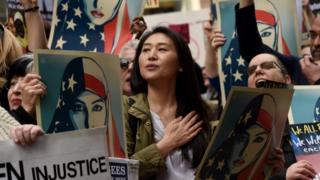
Image copyrightAFPImage captionA protest in New York against the ban. The state is one of several to launch legal challenges
A US judge has declined to issue an emergency order banning President Donald Trump's revised travel ban.
The ruling came from Seattle district judge James Robart, the same judge who had issued the order that in effect halted implementation of the first ban.
Judge Robart said lawyers needed to file more extensive documentation.
The new 90-day ban on citizens of six mostly Muslim nations is due to come into effect on Thursday but has sparked legal action in a number of states.
Lawyers in Washington state had asked Judge Robart to extend his decision on the first ban to cover the second.
But the judge cited procedural reasons for not doing so.
He said a complaint or a motion would have to be filed before he could rule.
The justice department had argued that since the initial travel order ban had been revoked, the judge's first ruling could no longer apply. Those opposing that argument said the new travel ban had the same effect as the original.
Media captionNew US travel ban: What's different?
In succeeding with the first ban, they argued the move was unconstitutional and damaging to businesses in Washington state.
White House spokesman Sean Spicer said on Thursday that the administration believed the new order would withstand legal scrutiny.
Several states have launched legal challenges.
Which states have launched challenges and why?
Oregon - said the order hurts residents, employers, universities health care system and economy
Washington - it has "same illegal motivations as the original" and harms residents, although fewer than the first ban
Minnesota - questioned the legality of the move, suggesting the Trump administration can't override the initial ban with a fresh executive order
New York - "a Muslim ban by another name", said the attorney general
Massachusetts - new ban "remains a discriminatory and unconstitutional attempt to make good on his campaign promise to implement a Muslim ban"
Hawaii - argued it would harm its Muslim population, tourism and foreign students
The first order, which Mr Trump signed in January, sparked mass protests as well as confusion at airports.
Critics maintain the revised travel ban still discriminates against Muslims. Trump supporters say the president is fulfilling his campaign promises to protect Americans.
Media caption"We trust President Trump on travel ban"
What is different about the new order?
Citizens of Iran, Libya, Syria, Somalia, Sudan and Yemen, six countries on the original 27 January order, will once more be subject to a 90-day travel ban.
Iraq was taken off the banned list because its government boosted visa screening and data sharing, White House officials said.
The new directive says refugees already approved by the state department can enter the US. It also lifts an indefinite ban on all Syrian refugees.
Green Card holders (legal permanent residents of the US) from the named countries will not be affected.
The new order does not give priority to religious minorities, unlike the previous directive. Critics of the Trump administration had argued that this was an unlawful policy showing preference to Christian refugees.




 Subscribe in a reader



 AFP
AFP